
Professional Weft Hair Care Guide
How to Stop Hair Wefts Shedding
Hair weft shedding is one of the most common problems after a weft has been cut, customized or installed without proper edge protection. Most shedding can be reduced with correct preparation, professional installation and careful maintenance.
Weft hair extensions are designed to create beautiful fullness, length and density. They are used by salons and professional hair extension artists because they can deliver a strong transformation with a flexible application plan. However, like any professional hair extension method, wefts must be prepared correctly before application. One of the most important steps is protecting the cut edges of the weft.
A machine weft is made with hair sewn into a horizontal seam. This seam holds the hair together and keeps the structure stable. When a stylist cuts the weft into smaller sections for installation, the original sealed line is interrupted. The cut edge becomes more vulnerable because the stitching has been opened. If that cut point is not sealed or secured properly, the hair can begin to release from the edge. This is one of the most common reasons why hair wefts start shedding after installation.
At Sach & Vogue Hair, weft hair extensions are treated as a professional product, not a simple strip of hair. Correct cutting, sealing, installation and aftercare are part of the result. A beautiful weft application should look full, feel comfortable and remain stable through normal salon wear and maintenance.
Why Do Hair Wefts Shed?
Hair wefts may shed for several reasons, but the most common cause is an unprotected cut edge. Before installation, a full weft is often measured and divided into smaller pieces to fit the shape of the client’s head. This is normal in professional salon work. The problem begins when the weft is cut and the edge is left untreated.
When the weft seam is cut, the woven or stitched structure loses some of its original support at that point. Without a protective barrier, the hair near the cut area can loosen over time. Brushing, washing, styling, sleeping and daily movement may increase the pressure on that weak point, which can lead to shedding.
Common causes of weft shedding include:
- Cutting the weft without sealing the cut edge
- Using an unsuitable adhesive or sealer on the seam
- Rough brushing or pulling near the weft line
- Incorrect sewing or beaded weft installation
- Too much tension on a small section of natural hair
- Sleeping with wet or tangled extensions
- Using heavy products that weaken the attachment area
- Skipping maintenance appointments
- Excessive heat, friction or aggressive styling
In many cases, shedding is not caused by the hair itself. It is caused by how the weft was customized, installed or maintained. This is why professional preparation is so important.
The Most Important Rule: Seal the Cut Edges
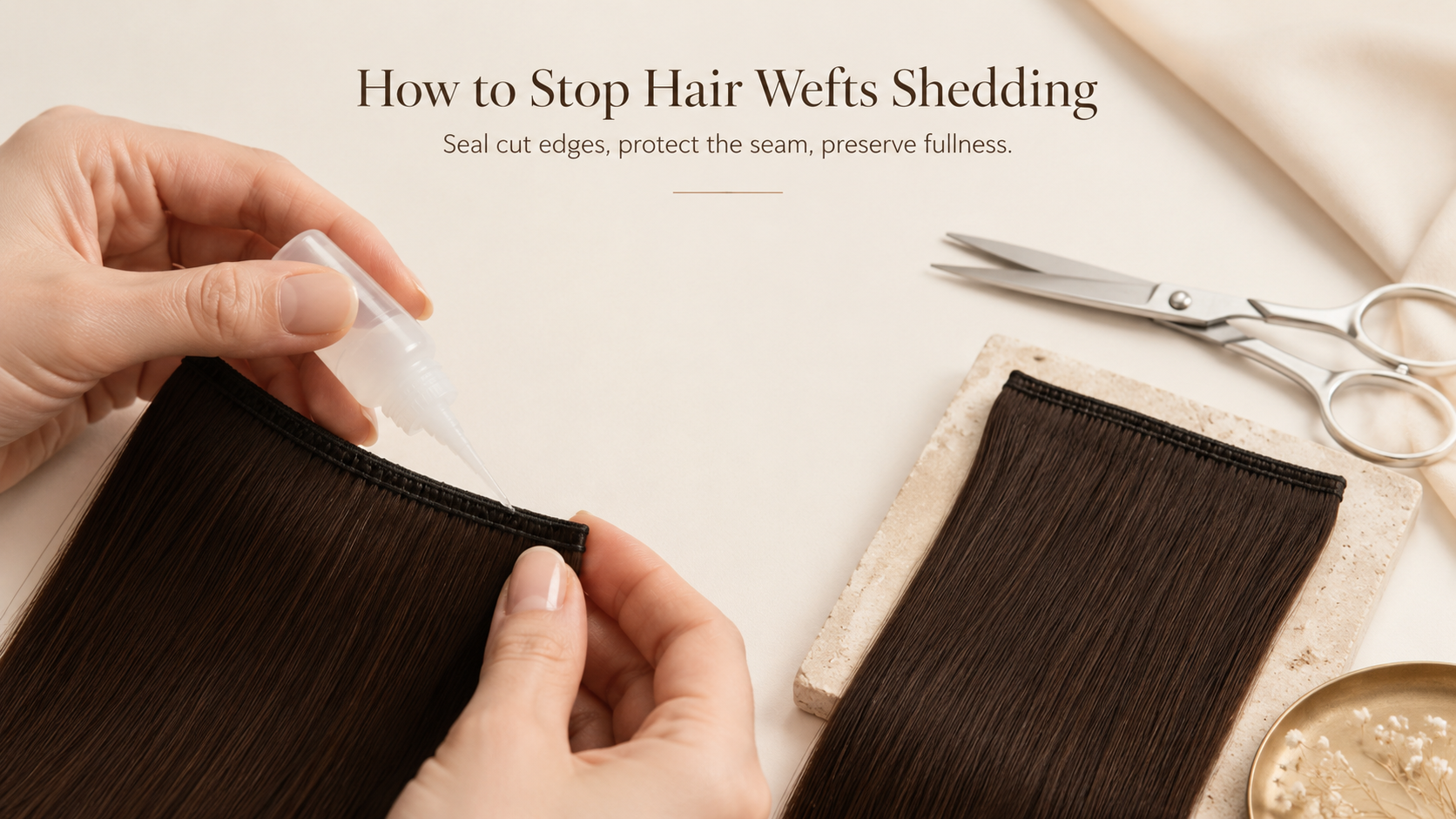
The most effective way to reduce shedding from a cut machine weft is to seal the modified edge before installation. Sealing creates a protective layer over the cut point and helps hold the stitching together. It reinforces the seam so that the hair does not easily release from the edge.
A suitable weft sealer, such as a clear or dark hair weft sealer, can be applied directly to the cut edge. Clear sealers are often preferred for lighter colours and blended shades, while darker sealers may be used for dark wefts where the seam needs to remain discreet. The product should be applied carefully and allowed to dry fully before the weft is installed.
Weft sealing should be done only on the seam or cut edge, not through the loose hair lengths. The goal is to protect the construction line, not to coat the hair. When applied correctly, a sealer acts as a barrier and helps reduce fibre loss from the customized area.
Should Hair Wefts Be Cut During Installation?
In a perfect world, a stylist would avoid unnecessary cutting. Less cutting means fewer vulnerable edges. However, in real salon work, cutting the weft is often necessary. Every client’s head shape, density, sectioning and placement plan is different. A full weft may need to be divided into smaller pieces to create a comfortable and natural-looking application.
The key is not simply to avoid cutting at all costs. The key is to cut with intention and seal every modified edge properly. A professional stylist should measure the section first, cut cleanly, seal the edge and allow the sealant to dry before installing or securing the piece.
Cutting randomly, cutting too many small pieces, or leaving the cut edge untreated can reduce the stability of the weft. This is especially important for machine wefts because the seam is the structural foundation of the product.
How to Seal Hair Wefts Before Installation
Weft sealing is a simple but important preparation step. The exact method may depend on the product used, but the professional logic is always the same: protect the cut seam before the weft is exposed to brushing, washing and daily movement.
Step 1: Measure Before Cutting
Before cutting, the stylist should measure the section carefully. The weft should be cut only where necessary. This prevents unnecessary weak points and helps the final installation remain cleaner.
Step 2: Cut Cleanly
Use sharp professional scissors and cut the weft in a controlled way. A rough or uneven cut can disturb the seam and increase the risk of shedding.
Step 3: Apply Weft Sealer to the Cut Edge
Apply a small amount of suitable weft sealer directly to the cut edge and seam area. The sealer should cover the modified point without spreading unnecessarily into the hair lengths.
Step 4: Let the Sealer Dry Completely
Do not install the weft while the sealer is still wet or sticky. Allow it to dry fully according to the product’s instructions. This helps create a stable protective barrier.
Step 5: Install with Correct Tension
After sealing, the weft should be installed using a professional method with balanced tension. Even a sealed weft can shed or become uncomfortable if the installation is too tight or poorly distributed.
Choosing the Right Weft Sealer
A good weft sealer should reinforce the seam without making the weft bulky, hard or uncomfortable. Many professionals use clear weft sealers because they are discreet and suitable for a wide range of colours. Dark sealers can be useful for black, dark brown and very deep brunette wefts.
The sealer should be flexible enough for salon wear and strong enough to protect the modified edge. It should not be applied heavily through the hair, because this can make the weft stiff or difficult to blend.
If a stylist uses fabric glue, fray check or a similar reinforcing product, it should be selected carefully and applied only to the seam area. The final goal is not to glue the hair together, but to secure the cut edge of the weft.
Professional Installation Matters
Sealing helps protect the cut edge, but installation quality is equally important. Weft extensions should be applied in a way that distributes weight evenly. If too much weight is placed on a small amount of natural hair, the client may feel pulling, discomfort or tension. This can also increase stress on the weft seam.
Whether the stylist uses beaded weft, sew-in, braidless sew-in or another professional method, the application should support the weight of the hair without creating unnecessary pressure. The row placement, number of rows and gram amount must be selected according to the client’s natural density and desired result.
A professional weft installation should not feel painful or excessively tight. The client should be able to move, style and maintain the hair comfortably.
How Brushing Can Affect Weft Shedding
Brushing is one of the most common daily habits that can either protect or damage hair extensions. Rough brushing near the weft line can pull on the seam and increase shedding over time. This is especially risky when the weft has been cut and not sealed.
The correct way to brush weft hair extensions is to start from the ends and move upward gradually. Hold the hair or the weft area gently to reduce tension while detangling. Never force a brush through knots. If the hair is tangled, separate it carefully with your fingers first.
Clients should use a suitable extension brush and avoid aggressive root brushing. Gentle daily detangling helps prevent matting and reduces pressure on the weft seam.
Washing and Drying Without Causing Shedding
Washing should be done carefully. Shampoo should clean the scalp and hair without rough rubbing around the weft line. The client should avoid twisting, scrubbing or piling the hair on top of the head. These movements can create friction and tangling.
Conditioner should be applied mainly through the mid-lengths and ends, not heavily around the attachment area. Too much product near the row can create build-up and make the installation feel heavy or uncomfortable.
Drying is extremely important. The roots and weft area should not remain wet for long periods. Sleeping with wet weft extensions can lead to tangling, tension, odour and stress on the seam. The hair should be gently towel-dried, detangled and dried properly before sleeping.
Sleeping With Weft Extensions
Night care plays a major role in keeping weft extensions stable. Hair should be dry and detangled before bed. Sleeping with wet or tangled hair can cause friction and pulling, which may increase shedding and matting.
A loose braid or low ponytail can help reduce movement while sleeping. Silk or satin pillowcases may also help reduce friction. The goal is to protect both the natural hair and the extension hair while the client sleeps.
If the hair becomes tangled at night, it should be gently detangled the next morning. Pulling through knots can stress the weft and natural hair.
Product Build-Up and Weft Stability
Heavy oils, sticky styling products, excessive leave-in products and product build-up can affect the feel and maintenance of weft extensions. While the hair lengths need moisture and care, the attachment area should remain clean and manageable.
Too much product near the seam can make the weft heavy, attract dust or create a sticky texture. This may increase tangling and make brushing more difficult. When brushing becomes difficult, the client may pull harder, which increases tension on the weft.
Use professional products recommended by the stylist and keep the attachment area clean. Good maintenance is about balance: the hair should be nourished, but the weft line should not be overloaded.
Maintenance Appointments Are Essential
Weft extensions need professional maintenance. As natural hair grows, the placement of the rows changes. The weft may sit lower, tension may shift and the installation may need adjustment.
Skipping maintenance can increase tangling, pulling and shedding. A stylist should check the row position, the condition of the weft, the natural hair and any cut edges. If a cut point needs reinforcement, it should be resealed or secured during maintenance.
Professional maintenance helps extend the life of the weft and keeps the client’s natural hair healthier.
Can Shedding Be Completely Stopped?
No hair extension method can promise zero shedding forever. A small amount of natural fibre loss can happen with normal wear, brushing and washing. However, excessive shedding is not normal and should be addressed.
The goal is to reduce unnecessary shedding by protecting the cut edges, applying the weft correctly and maintaining the hair properly. When the weft is sealed, installed with balanced tension and cared for gently, shedding can usually be reduced significantly.
Professional Checklist to Reduce Weft Shedding
- Measure the weft before cutting.
- Cut only where necessary.
- Use sharp professional scissors.
- Seal every cut edge before installation.
- Let the sealer dry completely.
- Install with correct tension and weight distribution.
- Do not overload fragile natural hair.
- Brush gently from the ends upward.
- Do not sleep with wet extensions.
- Keep the weft area clean and dry.
- Book regular maintenance appointments.
- Reinforce cut edges if needed during maintenance.
Sach & Vogue Hair Weft Extensions
Sach & Vogue Hair prepares premium human hair extensions for private clients, salons and professional buyers. Our weft hair extensions are planned according to colour, texture, length, weight and the intended application method.
For the best result, we recommend choosing the correct amount of hair, protecting cut edges during customization and working with a professional stylist for installation. Weft hair extensions can create beautiful fullness and length, but the final result depends on both product quality and professional preparation.
Clients visiting Fethiye, Ölüdeniz and nearby areas can also read our local service page: Premium Weft Hair Extensions in Fethiye.
For a complete product guide, read: Weft Hair Extensions.
Need Help Choosing Weft Hair Extensions?
If you are not sure which weft weight, colour or length is suitable, send clear daylight photos of your natural hair. Our team can guide you toward a more accurate private order plan.
Create Your Order
Private Order Hair Extensions
Professional Access
Contact Sach & Vogue Hair
FAQ
Why do hair wefts shed after cutting?
When a weft is cut, the seam becomes weaker at the cut edge. If that edge is not sealed, hair can loosen from the opened seam and begin to shed.
How do I stop weft hair from shedding?
Seal every cut edge before installation, use correct professional tension, brush gently and follow a proper maintenance routine.
Should I seal my wefts before installing them?
Yes. If the weft has been cut or customized, the cut edge should be sealed before installation to help reduce shedding.
Can I use clear weft sealer on blonde hair?
Clear weft sealer is usually preferred for lighter shades because it is more discreet. Dark sealer may be more suitable for dark brown or black wefts.
Is it bad to cut machine wefts?
Machine wefts can be cut when necessary, but every cut edge should be sealed or secured professionally. Unsealed cut edges are a common cause of shedding.
Can shedding be completely eliminated?
Minor shedding can happen with normal wear, but excessive shedding can usually be reduced by sealing cut edges, installing correctly and maintaining the extensions carefully.